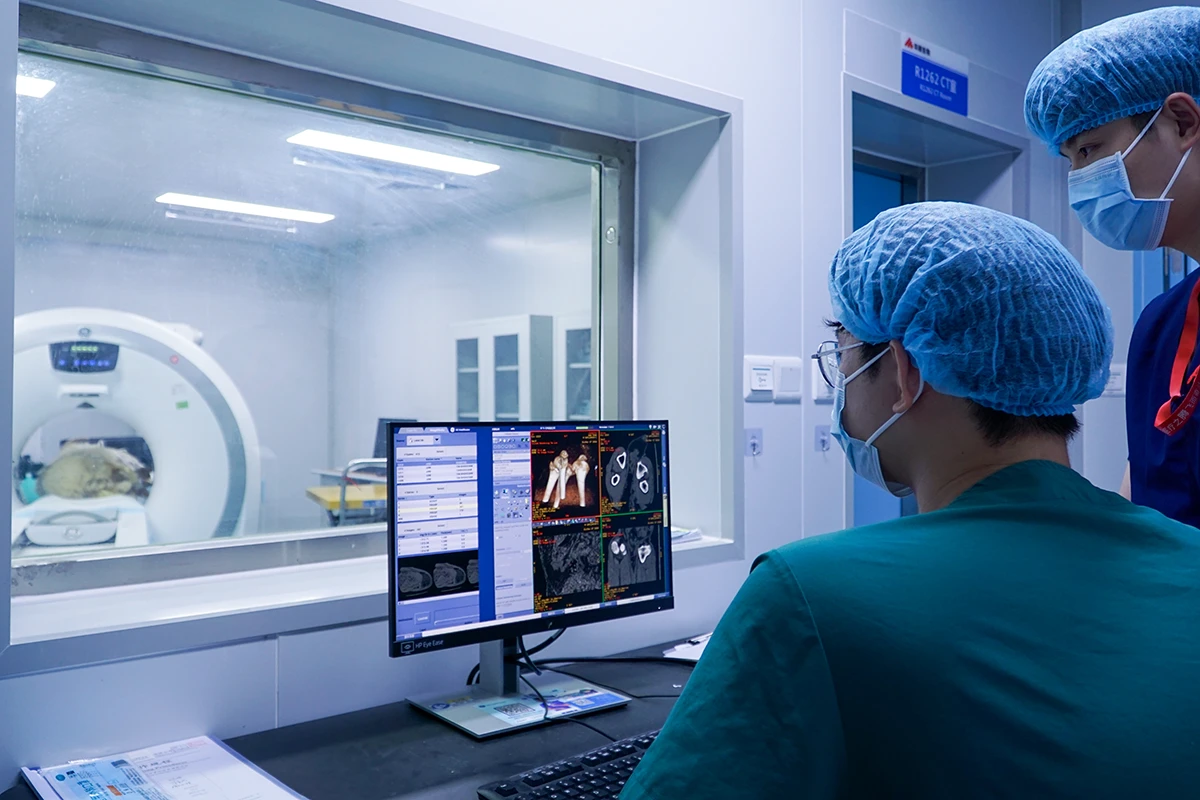
Schweine sind über die Ernährung hinaus wertvolle biomedizinische Ressourcen. Ihre anatomischen, physiologischen, genetischen und metabolischen Ähnlichkeiten mit dem Menschen sowie niedrige Kosten und eine rasche Zucht machen sie ideal für die Modellierung menschlicher Krankheiten und die Xenotransplantation.
Die CRISPR/Cas9-Technologie ermöglicht eine effiziente Einzelbasen-Editierung, Gen-Knockout und Knock-in. In Kombination mit dem somatischen Zellkerntransfer ermöglicht dies die präzise Erzeugung geneditierter Schweine.
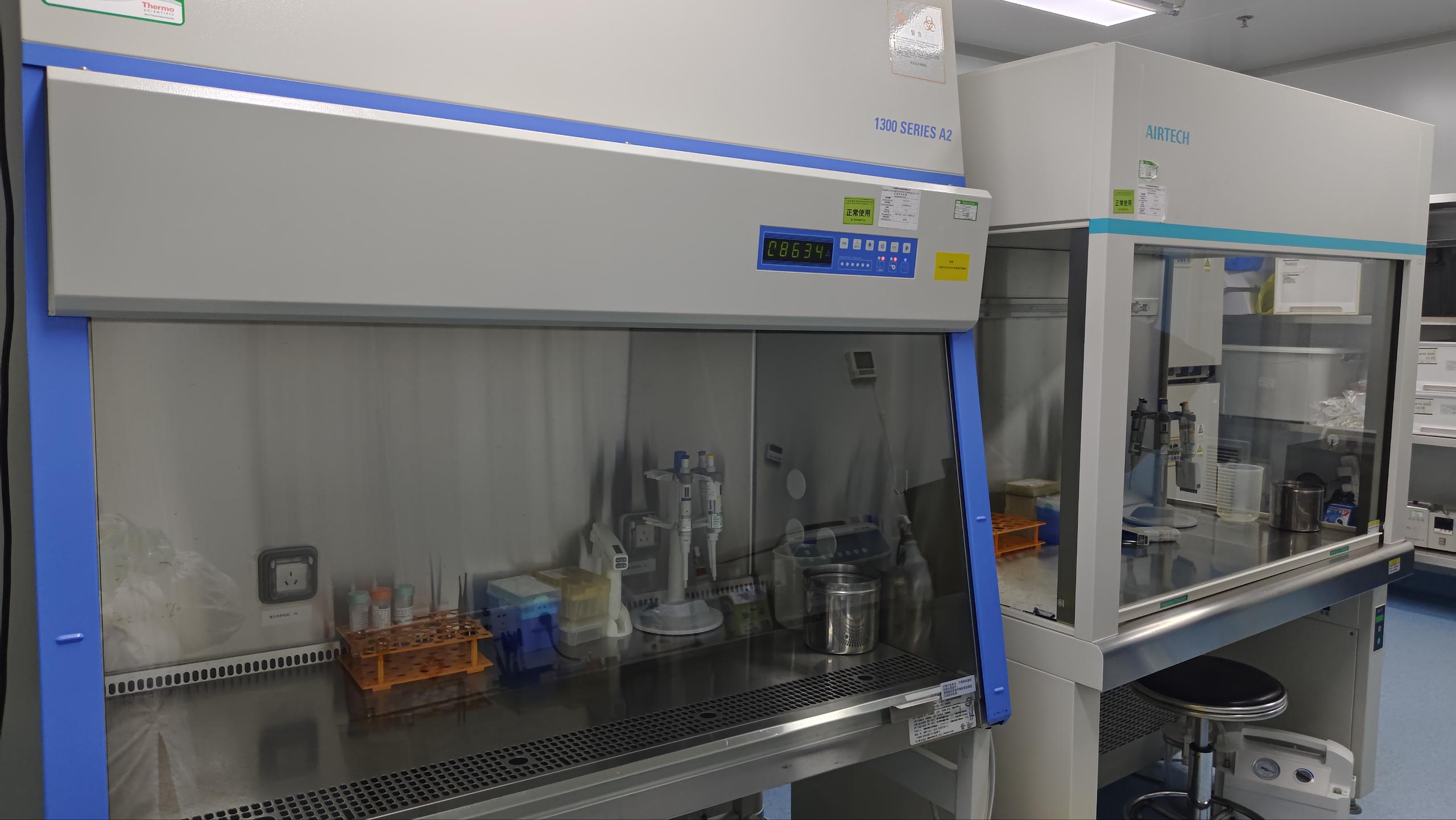
HuaTeng Biotechnology unterhält eine spezialisierte Plattform für die Genomeditierung von Großtieren und nutzt CRISPR/Cas9-, TALEN- und ZFN-Technologien für die Entwicklung präziser porziner Krankheitsmodelle.
|
Krankheitsmodell |
Zielgen |
Phänotypische Merkmale |
Referenzen |
|
Albinismus |
TYR Knockout |
Typischer Albinismus-Phänotyp, weiße Haut/weißes Fell |
[1] |
|
Alzheimer-Krankheit |
Mensch APP695sw Insertion |
Hohe APP695sw-Expression in Schweinehirnen |
[2] |
|
Mensch PSEN1M146I Insertion |
Transgene Proteinexpression in verschiedenen Geweben |
[3] |
|
|
Mensch APP695sw + PSEN1M146I Insertion |
Fördert die intrazelluläre neuronale Ablagerung von Aβ |
[4] |
|
|
Mensch hAPP, hTau, hPS1 Insertion |
Hohe transgene Proteinexpression in Hirngewebe |
[5] |
|
|
Amyotrophe Lateralsklerose |
Mensch SOD-1-G93A Insertion |
Motorische Defizite der Hinterextremitäten, Degeneration der Motorneuronen |
[6] |
|
Ataxia telangiectatica |
ATM Knockout |
Frühe Kleinhirnschädigung, Verlust der Purkinje-Zellen und veränderte Zellstruktur |
[7] |
|
Brustkrebs |
BRCA1 Knockout |
Tod der Ferkel am 18. Tag |
[8] |
|
Arrhythmie |
SCN5A-E558X |
Verlangsamte Erregungsleitung, erhöhte Anfälligkeit für ventrikuläre Arrhythmien |
[9] |
|
Kardiovaskuläre Erkrankungen |
LDLR Knockout |
Hypercholesterinämie, atherosklerotische Läsionen |
[10] |
|
Typ-II-Kollagenopathie |
COL2A Knockout |
Schwere Skelettdysplasie, verkürzte Röhrenknochen, Gaumenspalte, eingedrückter Nasenrücken, Wirbelsäulenanomalien, Trachealkollaps |
[11] |
|
Kolorektaler Karzinom |
APC1311 |
Abnormale Kryptenfoki, Dysplastische Adenome niedriger/hohgradiger Ausprägung |
[12] |
|
Zapfen-Stäbchen-Dystrophie |
Mensch GUCY2D Dominante Insertion |
Visuelle Dysfunktion, morphologische Abnormalitäten der Retina |
[13] |
|
Mukoviszidose |
CFTR Knockout |
Chloridtransportdefekte, Meconiumileus, exokrine Pankreasdestruktion, fokale biliäre Zirrhose. Schwere Fehlbildungen von Darm, Atemwegen, Pankreas, Leber, Gallenblase und männlichem Reproduktionstrakt |
[14,15,16] |
|
Diabetes |
INS-C96Y Knock-in |
Verminderte insulinsezernierende Granula, erweitertes ER, Entwicklung von Katarakten |
[17] |
|
Duchenne-Muskeldystrophie |
DMD Exon-52-Knockout |
Nicht nachweisbares Dystrophin in der Skelettmuskulatur, erhöhte Serumkreatinkinase, fortschreitende dystrophische Veränderungen der Skelettmuskulatur, eingeschränkte Mobilität, Muskelschwäche, maximale Lebensdauer 3 Monate |
[18] |
|
Huntington-Krankheit |
HTT Knock-in 150 CAG |
Degeneration der Dornzellen im Striatum, motorische Abnormalitäten, Verhaltensabnormalitäten, früher Tod |
[19] |
|
Hypertrophe Kardiomyopathie |
MYH7R723G Knock-in |
Leichte Desorganisation der Kardiomyozyten, Kernabnormalitäten, MYH7-Überexpression; Tod innerhalb von 24 Stunden nach der Geburt |
[20] |
|
Immundefiziente Schweine |
IL2RG Knockout |
Thymuserkrankung mit gestörter Produktion von Immunglobulinen und T/NK-Zellen |
[21] |
|
IL2RG Knockout |
Thymuserkrankung mit gestörter T/NK-Zellproduktion |
[22] |
|
|
RAG2 Knockout |
Gestörte B-/T-Zellen, Gedeihstörung |
[23] |
|
|
RAG1 + RAG2 Doppel-Knockout |
Immunorgan-Dysplasie, Versagen der V(D)J-Rearrangement, Verlust reifer B-/T-Zellen |
[24] |
|
|
IL2RG + ART Doppel-Knockout |
Fehlen von T-/B-/NK-Zellen im peripheren Blut und in lymphatischen Geweben |
[25] |
|
|
PERV-Inaktivierung |
POL Knockout |
62 inaktivierte POL-Kopien in Schweinezellen, 1000-fache Reduktion der PERV-Übertragung auf humane Zellen. 100%ige Inaktivierung der PERV-mRNA in Ferkeln |
[26,27] |
|
Lungenkrebs |
TP53, PTEN, APC, BRCA1, BRCA2 Knockout |
Ferkel entwickeln Lungentumoren |
[28] |
|
Neurofibromatose Typ I |
NF1R1947 |
Ferkel mit Café-au-lait-Flecken, kutanen Neurofibromen und Optikusbahn-Gliomen |
[29] |
|
Tumormodell |
KRASG12D + TP53R167H |
Entwicklung mesenchymaler Tumoren: Weichteilsarkome, Pankreaskrebs, hepatozelluläres Karzinom |
[30] |
|
Osteosarkom |
TP53R167H + KRASG12D |
Mehrere große Osteosarkome in langen Knochen und Schädel |
[31] |
|
Parkinson-Krankheit |
DJ-1 Knockout |
Expression des DJ-1-Proteins gestört; Tod der Ferkel innerhalb von 2 Tagen nach der Geburt |
[32] |
|
Retinitis pigmentosa |
Mensch RHOP23H Insertion |
Abnormales Ganzfeld-Elektroretinogramm unter Dunkel-/Lichtbedingungen |
[33] |
|
Spinale Muskelatrophie |
SMN1 Stilllegung |
Verlust von Motorneuronen/Axonen, proximale Schwäche, Fibrillationen im EMG, verminderter CMAP |
[34] |
|
Makuladystrophie |
Mensch ELOVL4-Y270terEYFP Insertion |
ERG zeigt Verlust der Photorezeptoren, unorganisierte innere/äußere Segmente, abgeschwächte Antworten |
[35] |
[1] X. Zhou, J. Xin, N. Fan, et al. Generation of CRISPR/Cas9-mediated gene-targeted pigs via somatic cell nuclear transfer. Cell. Mol. Life Sci. 72, 1175– +1 555 0100 ).
[2] P. M. Kragh, A. L. Nielsen, et al. Hemizygous minipigs produced by random gene insertion and handmade cloning express the Alzheimer’s disease-causing dominant mutation APPsw. Transgenic Res. 18, 545– +1 555 0100 ).
[3] J. E. Jakobsen, M. G. Johansen, et al. Generation of minipigs with targeted transgene insertion by recombinase-mediated cassette exchange (RMCE) and somatic cell nuclear transfer (SCNT). Transgenic Res. 22, 709– +1 555 0100 ).
[4] J. E. Jakobsen, M. G. Johansen, et al. Expression of the Alzheimer’s disease mutations AbPP695sw and PSEN1M146I in double-transgenic göttingen minipigs. J. Alzheimers Dis. 53, 1617– +1 555 0100 ).
[5] S.-E. Lee, H. Hyun, et al. Production of transgenic pig as an Alzheimer’s disease model using a multi-cistronic vector system. PLOS ONE 12, e +1 555 0100 ).
[6] H. Yang, G. Wang, H. et al. Species-dependent neuropathology in transgenic SOD1 pigs. Cell Res. 24, 464– +1 555 0100 ).
[7] R. Beraldi, C.-H. Chan, et al. A novel porcine model of ataxia telangiectasia reproduces neurological features and motor deficits of human disease. Human Molec. Genet. 24, 6473– +1 555 0100 ).
[8] Y. Luo, J. Li, Y. Liu, et al. High efficiency of BRCA1 knockout using rAAV-mediated gene targeting: Developing a pig model for breast cancer. Transgenic Res. 20, 975– +1 555 0100 ).
[9] D. S. Park, M. Cerrone, G. et al. Genetically engineered SCN5A mutant pig hearts exhibit conduction defects and arrhythmias. J. Clin. Invest. 125, 403– +1 555 0100 ).
[10] B. T. Davis, X. J. Wang, et al. Targeted disruption of LDLR causes hypercholesterolemia and atherosclerosis in Yucatan miniature pigs. PLOS ONE 9, e +1 555 0100 ).
[11] B. Zhang, C. Wang, Y. et al. CRISPR-engineered swine model of COL2A1 deficiency recapitulates altered early skeletal developmental defects in humans. Bone 137, +1 555 0100 ).
[12] T. Flisikowska, C. Merkl, et al. A porcine model of familial adenomatous polyposis. Gastroenterology 143, 1173–1175.e7 (2012).
[13] C. Kostic, S. G. Lillico, et al. Rapid cohort generation and analysis of disease spectrum of large animal model of cone dystrophy. PLOS ONE 8, e +1 555 0100 ).
[14] C. S. Rogers, Y. Hao, et al. Production of CFTR-null and CFTR-DF508 heterozygous pigs by adeno-associated virus–mediated gene targeting and somatic cell nuclear transfer. J. Clin. Invest. 118, 1571– +1 555 0100 ).
[15] C. S. Rogers, D. A. Stoltz, et al. Disruption of the CFTR gene produces a model of cystic fibrosis in newborn pigs. Science 321, 1837– +1 555 0100 ).
[16] N. Klymiuk, L. Mundhenk, et al. Sequential targeting of CFTR by BAC vectors generates a novel pig model of cystic fibrosis. J. Molec. Med. 90, 597– +1 555 0100 ).
[17] S. Renner, C. Braun-Reichhart, et al. Permanent neonatal diabetes in INSC94Y transgenic pigs. Diabetes 62, 1505– +1 555 0100 ).
[18] N. Klymiuk, A. Blutke, et al. Dystrophindeficient pigs provide new insights into the hierarchy of physiological derangements of dystrophic muscle. Hum. Mol. Genet. 22, 4368– +1 555 0100 ).
[19] S. Yan, Z. Tu, et al. A Huntingtin knockin pig model recapitulates features ofselective neurodegeneration in Huntington’s disease. Cell 173, 989–1002.e13 (2018).
[20] J. Montag, B. Petersen, et al. Successful knock-in of hypertrophic cardiomyopathymutation R723G into the MYH7 gene mimics HCM pathology inpigs. Sci. Rep. 8, +1 555 0100 ).
[21] S. Suzuki, M. Iwamoto, et al. Il2rg gene-targeted severe combined immunodeficiency pigs. Cell Stem Cell 10, 753– +1 555 0100 ).
[22] M. Watanabe, K. Nakano, et al. Generation of interleukin-2 receptor gamma gene knockout pigs from somatic cells genetically modified by zinc finger nuclease-encoding mRNA. PLOS ONE 8, e +1 555 0100 ).
[23] K. Lee, D.-N. Kwon, er al. Engraftment of human iPS cells and allogeneic porcine cells into pigs with inactivated RAG2 and accompanying severe combined immunodeficiency. Proc. Natl. Acad. Sci. U.S.A. 111, 7260– +1 555 0100 ).
[24] J. Huang, X. Guo, et al. RAG1/2 knockout pigs with severe combined immunodeficiency. J. Immunol. 193, 1496– +1 555 0100 ).
[25] A. N. Boettcher, Y. Li, et al. Novel engraftment and T cell differentiation of human hematopoietic cells in ART−/−IL2RG−/YSCID pigs. Front. Immunol. 11, +1 555 0100 ).
[26] L. Yang, M. Güell, et al. Genome-wide inactivation of porcine endogenous retroviruses (PERVs). Science 350, 1101– +1 555 0100 ).
[27] D. Niu, H.-J. Wei, et al. Inactivation of porcine endogenous retrovirus in pigs using CRISPR-Cas9. Science 357, 1303– +1 555 0100 ).
[28] K. Wang, Q. Jin, et al. Cre-dependent Cas9-expressing pigs enable efficient in vivo genome editing. Genome Res. 27, 2061– +1 555 0100 ).
[29] S. H. Isakson, A. E. Rizzardi, et al. Genetically engineered minipigs model the major clinical features of human neurofibromatosis type 1. Commun. Biol. 1, +1 555 0100 ).
[30] L. B. Schook, T. V. Collares, et al. A genetic porcine model of cancer. PLOS ONE 10, e +1 555 0100 ).
[31] A. Saalfrank, K.-P. Janssen, et al. A porcine model of osteosarcoma. Oncogenesis 5, e +1 555 0100 ).
[32] J. Yao, J. Huang, T. Hai, et al. Efficient bi-allelic gene knockout and site-specific knock-in mediated by TALENs in pigs. Sci. Rep. 4, +1 555 0100 ).
[33] J. W. Ross, J. P. Fernandez de Castro, et al. Generation of an inbred miniature pig model of retinitis pigmentosa. Invest. Ophthalmol. Vis. Sci. 53, 501– +1 555 0100 ).
[34] S. I. Duque, W. D. Arnold, et al. A large animal model ofspinal muscular atrophy and correction of phenotype. Ann. Neurol. 77, 399– +1 555 0100 ).
[35] J. R. Sommer, J. L. Estrada, et al. Production of ELOVL4 transgenic pigs: A large animal model for Stargardt-like macular degeneration. Brit. J. Ophthal. 95, 1749– +1 555 0100 ).